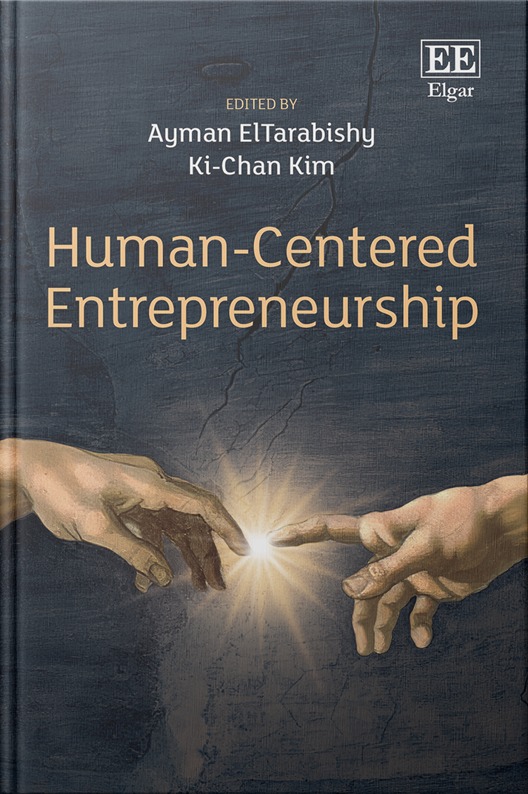
If you lead a university or school.
You’ll see a public university run like a startup, without losing its values.
“The Three E’s are not a Western invention; they are a structure that cultures have independently discovered and named in their own languages.”
Three kinds of readers
From the book · why a windmill
The university’s logo refers to the region’s heritage, represented by a windmill, a technology recognized as a symbol of human labor on the vast plains inhabited by immigrant settlers in the late nineteenth century. The windmill enabled groundwater extraction with no energy other than the wind, which is frequent on the Argentine plains. The availability of water enabled the establishment of rural livestock and crop enterprises that later led to industrial development. The windmill is a symbol of progress. The technology contributed to the development of hardworking communities that organized themselves to promote associations and institutions, with education as a fundamental pillar (Institutional Development Plan, 2017).
Far from being a nostalgic decoration, the windmill represents a technology that, since it arrived on the Pampas in 1880, has transformed arid plains into productive settlements by harnessing wind power. In UNRaf’s identity, the windmill symbolizes technology serving human development. This catalyst transforms knowledge into real prosperity, allowing the university to function as an academic startup while remaining deeply rooted in the region’s tradition of cooperation.
A university startup
Before UNRaf, young people in the Rafaela region had to leave for the big cities to study. The university was built to keep talent at home.
Argentina, 2016–2023
+45.7%
University students nationwide, about 5.9 percent a year.
Milestones
The Windmill Framework
UNRaf’s identity rests on four perspectives. The chapter reads each one through the Three E’s. Tap a blade to turn it to the top.
{{sel.e}}
{{sel.name}} perspective
{{sel.what}}
{{sel.how}}
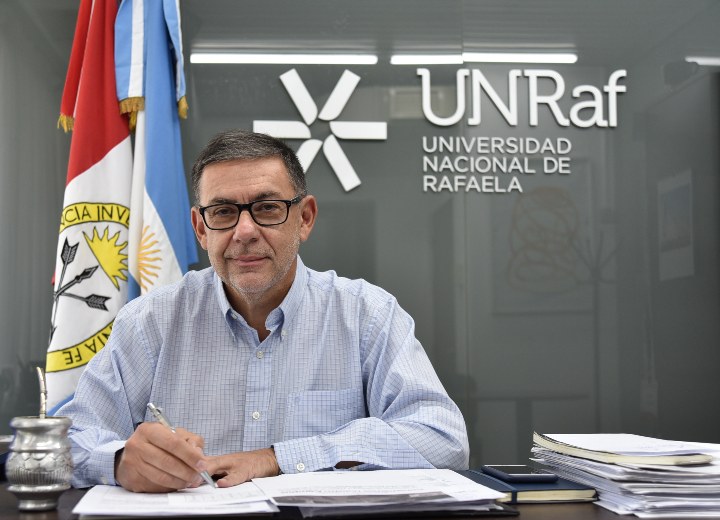
Leadership, through the 3S model
The chapter reads the rector’s leadership through the 3S model from Chapter 3.
A pro-social orientation to power.
A sincere willingness to listen to the community’s needs.
The current challenge: making UNRaf’s values outlast its founders. Chapter 2 shows what happens at Boeing and Lululemon when they don’t.
After nearly a decade
82.6%
of 2020–2024 graduates are employed, and nearly 7 in 10 work in fields tied to their studies
5.4%
graduation rate in 2024, above the 4.39% average for Argentina’s public universities
635
community agreements since 2015, with 56 companies, 39 chambers and foundations, and 37 municipalities
75
international agreements since 2018, 63 of them still active
Graduation rate
Above the public universities, below the private ones.
Who UNRaf works with
Of 635 community agreements since 2015, 197 are still active.
UNRaf Graduate and Professional Development Department (2025), as cited in the chapter. Employment survey: 241 of 567 graduates responded.
Chapter Ten
{{pg.lead}}
{{pg.bold}}
{{pg.big}}
— {{pg.sign}}
Turn the page
Older than the theory
Empathy
as collective action
Enablement
as shared resources
Empowerment
as democratic governance
The chapter calls cooperativism Argentina’s pre-theoretical version of HCE. Other chapters find the same pattern elsewhere: Jo Shik in Korea and karama in the Arab world.
About the authors
{{a.role}}
{{a.bio}}
Ascúa, R., Rojas-Berrio, S., & Gutiérrez Ferrero, M. C. (2027). From windmills to innovation: Entrepreneurship and innovation from a human perspective at the National University of Rafaela, Argentina. In A. ElTarabishy & K.-C. Kim (Eds.), Human-Centered Entrepreneurship (pp. 145–159). Edward Elgar Publishing.